Surviving Your First Chinese Business Dinner: A Complete Guide
Everything you need to know about seating arrangements, toasting etiquette, and making a great impression at your first Chinese business dinner.
Anonymous
November 15, 2025
Your first Chinese business dinner can feel overwhelming. The rules seem endless, and the stakes feel high. But don't worry—with the right preparation, you can navigate this cultural experience with confidence and even enjoy it.
The Importance of Seating
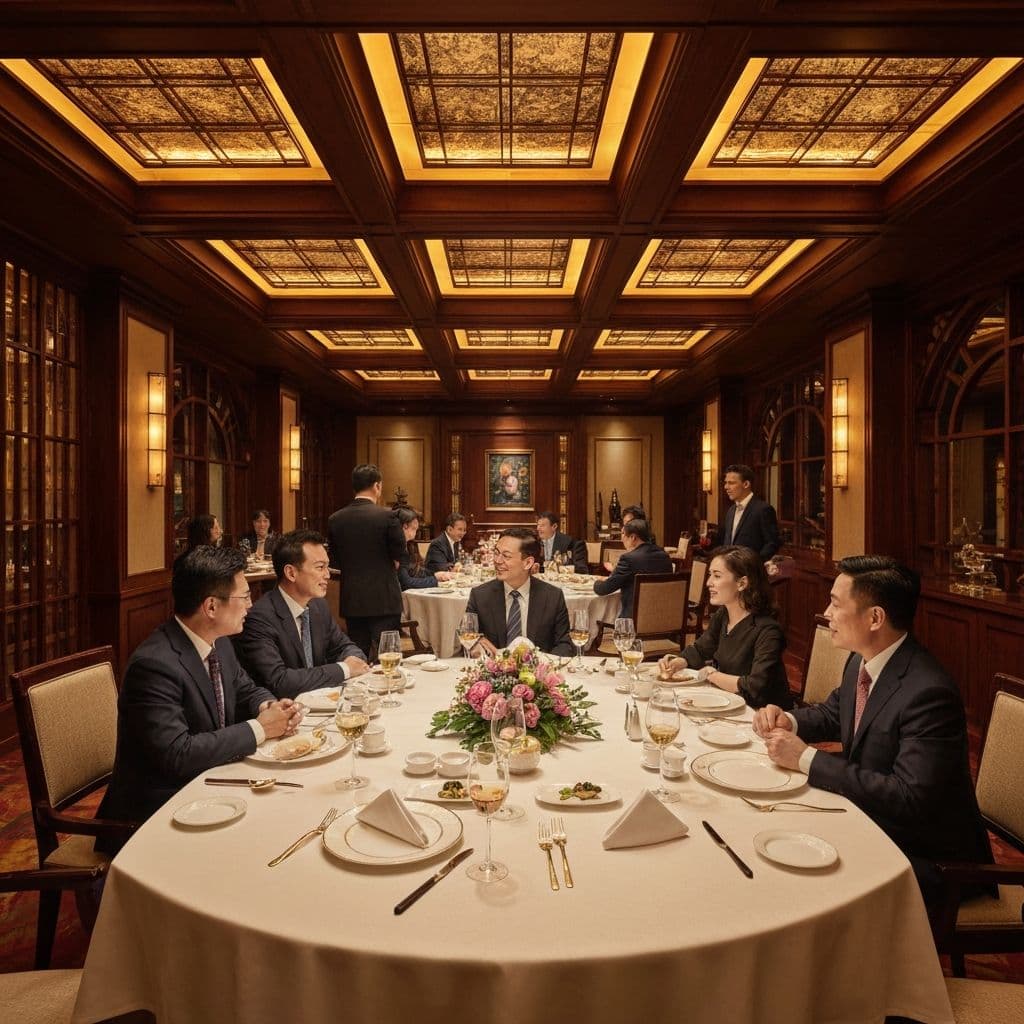
In Chinese business dinners, seating is never random. The most important guest sits facing the door, while the host typically sits with their back to the door.
If you're unsure where to sit, always wait to be directed. Taking the wrong seat can inadvertently cause offense or confusion.
Key Seating Rules
- The seat facing the door is the "seat of honor"
- Never sit before your host indicates your place
- The host usually sits across from or next to the guest of honor
- Junior members typically sit furthest from the door
Mastering the Art of Toasting
Toasting (敬酒, jìng jiǔ) is perhaps the most important ritual of Chinese business dining. It's not just about drinking—it's about showing respect and building relationships.
Here's what you need to know:
- Always toast with two hands — Hold your glass with both hands to show respect, especially when toasting someone senior
- Lower your glass — When clinking glasses, lower yours slightly below your senior's glass as a sign of humility
- The "Ganbei" factor — Be prepared for "干杯" (gān bēi, "dry cup") which means drinking the entire glass
Pro tip: If you can't drink alcohol, explain politely at the beginning. Most hosts will understand and offer tea or soft drinks instead.
Food Etiquette
Following proper food etiquette shows respect and cultural awareness. Chinese dining is communal, with dishes shared from the center of the table.
- Wait for the host to begin eating or invite you to start
- Try everything offered, even just a small bite—refusing food can be seen as rude
- Never finish everything on your plate—it implies the host didn't provide enough food
- Compliment the food genuinely and specifically
- Use the serving chopsticks (公筷) when available, not your personal ones
Conclusion
Remember, your hosts understand you're a foreigner learning their customs. Showing genuine effort to respect their traditions will earn you far more goodwill than executing every rule perfectly.
Relax, be observant, and enjoy the experience. The relationships built over these dinners often prove more valuable than any contract.
Enjoyed this article?
Share it with your network